Walk into a Norwegian restaurant during the holiday season and you’ll likely spot a dish that leaves visitors both curious and slightly nervous: lutefisk.
What is lutefisk?
Some Norwegians consider it an essential part of Christmas. Others avoid it entirely. Its unusual preparation method, distinctive texture, and centuries-old history have earned lutefisk a reputation as one of Scandinavia’s most debated dishes.
For travellers exploring Norway during the festive season, lutefisk is impossible to ignore. Whether you decide to try it or not, it’s a fascinating part of Norwegian food culture and a tradition that has survived for generations.
What Is Lutefisk?
Lutefisk is a traditional Nordic dish made from dried white fish, usually cod.
The fish is first dried for weeks and then soaked in water before being treated with lye, an alkaline substance historically used in food preservation. After another soaking process removes the lye, the fish becomes soft, delicate, and almost translucent.
The result is unlike any fish dish most visitors have encountered before.
The name itself comes from the Norwegian words lut (lye) and fisk (fish), literally meaning “lye fish.”
Lutefisk remains one of the most recognizable dishes associated with the Norwegian holiday season and continues to be served by families and restaurants across the country.
Although lutefisk is strongly associated with Norway today, variations of the dish are also found in Sweden and parts of Finland.
Why Is Lutefisk Made With Lye?
The use of lye often surprises first-time visitors.
The tradition dates back hundreds of years, when preserving food through long winters was essential. Drying fish made it possible to store large quantities for months, while the lye treatment helped transform the hardened fish into something edible again.
The process may sound unusual by modern standards, but it reflects the creativity and resourcefulness of Nordic communities living in a challenging climate.
Today, the lye is completely removed before the fish is cooked and served.
What Does Lutefisk Taste Like?
This is where opinions start to differ.
The flavor itself is surprisingly mild. It tastes much less fishy than many people expect and has a delicate, slightly sweet quality.
The texture is what makes lutefisk memorable.
After cooking, the fish becomes extremely soft and almost jelly-like. Some people love its silky consistency, while others find it difficult to get used to. Even many Norwegians admit that the texture is an acquired taste.
If you’ve heard travellers describing lutefisk as strange, they’re usually talking about the texture rather than the flavor.
Why Is Lutefisk So Controversial?
Few Norwegian dishes inspire as much debate.
For many families, lutefisk is a treasured Christmas tradition that brings back childhood memories and family gatherings. For others, it has become the subject of annual jokes and friendly arguments around the holiday table.
This split has earned lutefisk a reputation as Norway’s most controversial festive food.
Its unusual preparation method, soft texture, and strong connection to tradition mean people often either love it or leave it.
Yet even those who don’t enjoy eating it often appreciate its role in Norwegian culture.
When Is Lutefisk Eaten?
Lutefisk is most commonly served during the Christmas season.
From late autumn through December, restaurants throughout Norway feature special lutefisk menus, and many families prepare it as part of their holiday celebrations.
In some regions, it remains one of the most anticipated seasonal meals of the year.
Outside the festive period, however, you’re much less likely to encounter it.
For travellers hoping to try authentic lutefisk, December is generally the best time to visit.

How Is Lutefisk Served?
Traditional accompaniments vary across Norway, but lutefisk is often served with hearty side dishes designed to complement its delicate flavor.
Popular additions may include:
- Boiled potatoes
- Peas
- Mustard
- White sauce
- Crispy bacon
- Melted butter
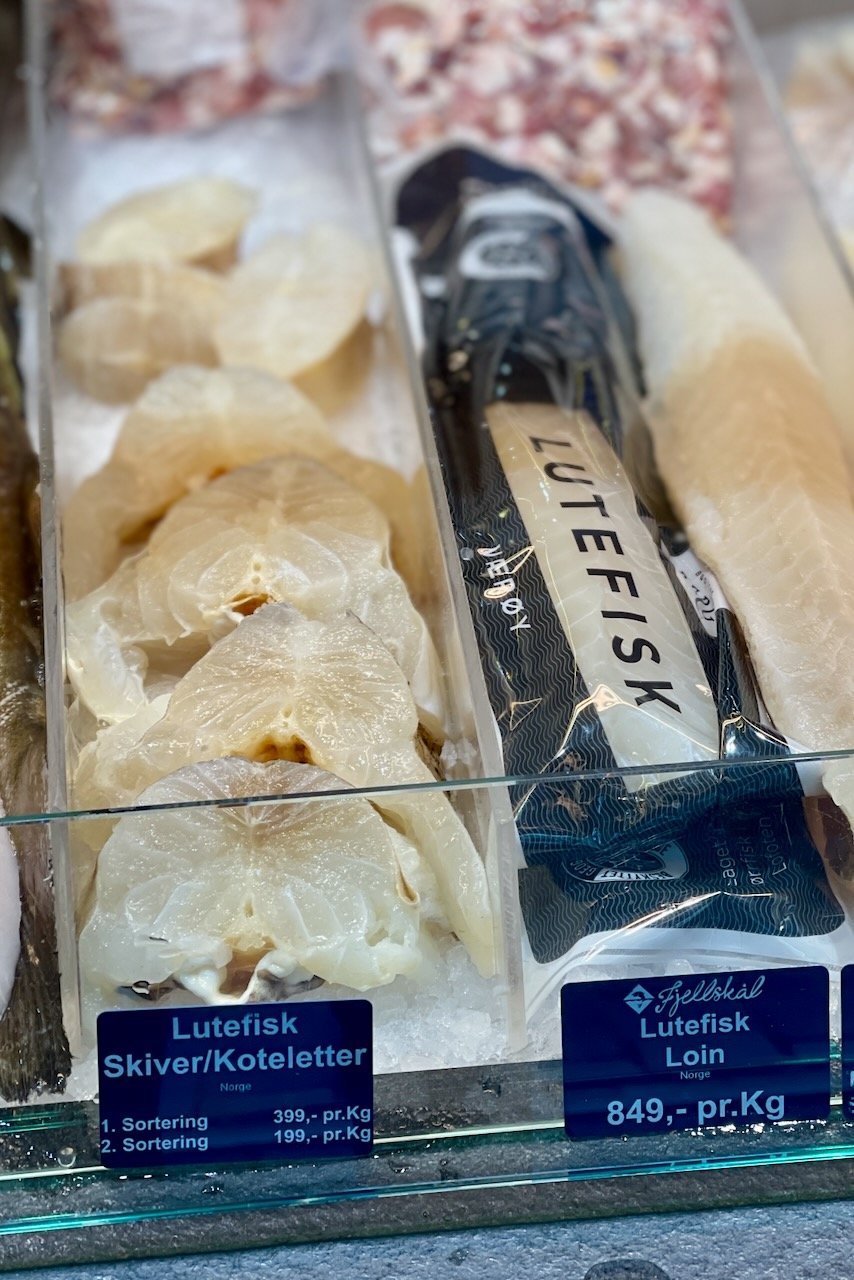
These simple ingredients help turn the relatively mild fish into a satisfying winter meal. Look at the picture above: we encountered this very lutefisk in Stavanger’s fish market, and all the necessary components to make this classic dish at home were sold alongside it: bacon bits, boiled potatoes, mustard sauce and mushy peas.
The combination of soft fish, salty bacon, and creamy accompaniments is one reason lutefisk remains popular despite its unusual reputation.
Should Tourists Try Lutefisk?
If you’re interested in experiencing Norwegian culture through food, lutefisk is certainly worth considering.
Will it become your favorite meal in Norway? Maybe not.
But trying lutefisk offers something many travellers are looking for: a genuine cultural experience that goes beyond the usual tourist favourites.
Even if the texture isn’t for you, you’ll leave with a better understanding of Norway’s culinary traditions and a story to tell when you get home.
And who knows? You might end up joining the group of devoted lutefisk fans who eagerly await its return every Christmas.

Is Lutefisk the Same as Salt Cod?
Because both lutefisk and salt cod are traditionally made from cod and have deep roots in Nordic food culture, many visitors assume they’re essentially the same thing. In reality, they’re quite different products that offer very different eating experiences.
Lutefisk starts as dried cod that is soaked in water and then treated with lye before being soaked again. This process transforms the fish into something incredibly tender with a delicate flavor and the unique texture that lutefisk is known for.
Salt cod, often called bacalao, bacalhau, or baccalà depending on the country, is preserved with salt rather than lye. After being soaked to remove excess salt, it develops a much firmer texture and a richer, more pronounced fish flavor.
Can You Substitute Salt Cod for Lutefisk?
If you’re trying to recreate a traditional lutefisk dinner, salt cod won’t produce the same result. The texture and flavor are simply too different. Lutefisk is prized for its delicate, almost melt-in-your-mouth consistency, while salt cod remains firmer and more substantial.
That said, if you can’t find lutefisk, don’t be discouraged.
Many of the classic ingredients that accompany a lutefisk meal are delicious in their own right and pair beautifully with salt cod. Crispy bacon, boiled potatoes, peas, melted butter, mustard, and creamy sauces all complement salt cod wonderfully and can create a hearty Scandinavian-inspired meal that captures many of the same comforting holiday flavors.
In other words, while salt cod isn’t a true replacement for lutefisk, it’s still an excellent choice if you’d like to experience some of the traditional components of a Norwegian festive fish dinner.
Lutefisk vs. Salt Cod at a Glance
The easiest way to think about the difference is this:
- Lutefisk is mild, delicate, and exceptionally tender.
- Salt cod is savory, firmer, and more intensely flavored.
Both dishes grew out of the need to preserve fish for long Nordic winters, and both remain important parts of Scandinavian culinary heritage. They simply took different paths over the centuries and evolved into distinctly different traditions.
For travelers visiting Norway, trying lutefisk offers a chance to experience one of the country’s most unique Christmas customs. And if lutefisk isn’t available, a traditional salt cod dish is still a wonderful way to explore the flavors that have shaped Norwegian cooking for generations.
The Verdict on Lutefisk
What is lutefisk? Now you know.
Lutefisk isn’t just a fish dish. It’s a piece of Norwegian history.
For centuries, it helped communities make use of preserved food during long northern winters. Today, it continues to bring families together and spark lively debates at Christmas tables across the country.
Lutefisk remains one of Norway’s most distinctive culinary traditions and one of the most memorable foods a visitor can encounter during the festive season.