Germany’s fermented classic and France’s quiet culinary obsession.
Few dishes carry as much history, comfort, and cross‑border personality as sauerkraut. What begins as simple fermented cabbage becomes, in Germany and France, a full, hearty, celebratory meal layered with smoked meats, spices, and centuries of culinary tradition. It is rustic, deeply satisfying, and surprisingly cosmopolitan.
Germany: Where Sauerkraut Becomes a Feast
In Germany, sauerkraut is not an afterthought. It is a culinary anchor with roots stretching back more than two thousand years, when fermentation was essential for surviving long winters. Over time, this preservation method evolved into a defining flavor of German cooking.
A traditional German sauerkraut platter often includes smoked sausages, cured pork such as Kassler, bacon or lardons, and aromatics like juniper berries, bay leaves, and caraway. Slow simmering melds everything into a tangy, smoky, warming dish that feels both ancient and timeless.
Where to Eat It in Munich
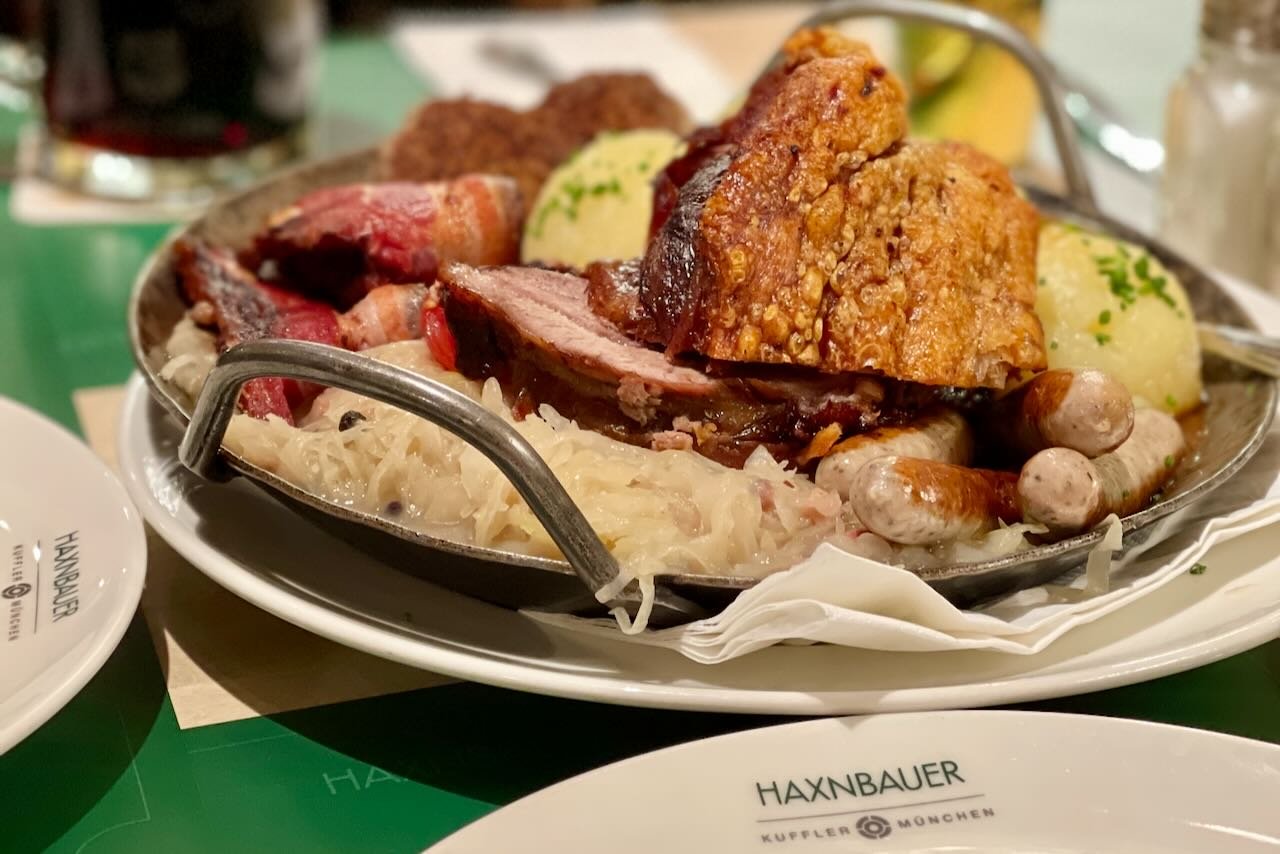
Haxnbauer is one of Munich’s most iconic destinations for Bavarian comfort food. Famous for its beechwood‑grilled pork knuckles, it serves sauerkraut that is richly flavored and perfectly balanced by the slow‑roasted meats. It is a classic Munich experience and a reliable choice for anyone seeking the full traditional plate.
We love the Sauerkraut here, highly recommended!
Where to Eat It in Berlin
In Berlin, the most atmospheric and historically rooted option is Zur Gerichtslaube. Located in a 13th‑century building in the Nikolaiviertel, it specializes in Berlin‑Brandenburg classics. Their sauerkraut with assorted meats is robust, tangy, and deeply tied to regional tradition. The medieval setting adds a sense of continuity that makes the dish feel even more meaningful.
France: Choucroute Garnie, the Alsatian Showstopper
Across the Rhine, the French embrace sauerkraut with equal enthusiasm, especially in Alsace, where German heartiness meets French finesse.
The French version, choucroute garnie, is a showpiece: wine‑braised sauerkraut, usually with Riesling, layered with smoked pork, ham hocks, sausages, and sometimes even foie gras. It is aromatic, celebratory, and unmistakably Alsatian.
Where to Eat It in Strasbourg
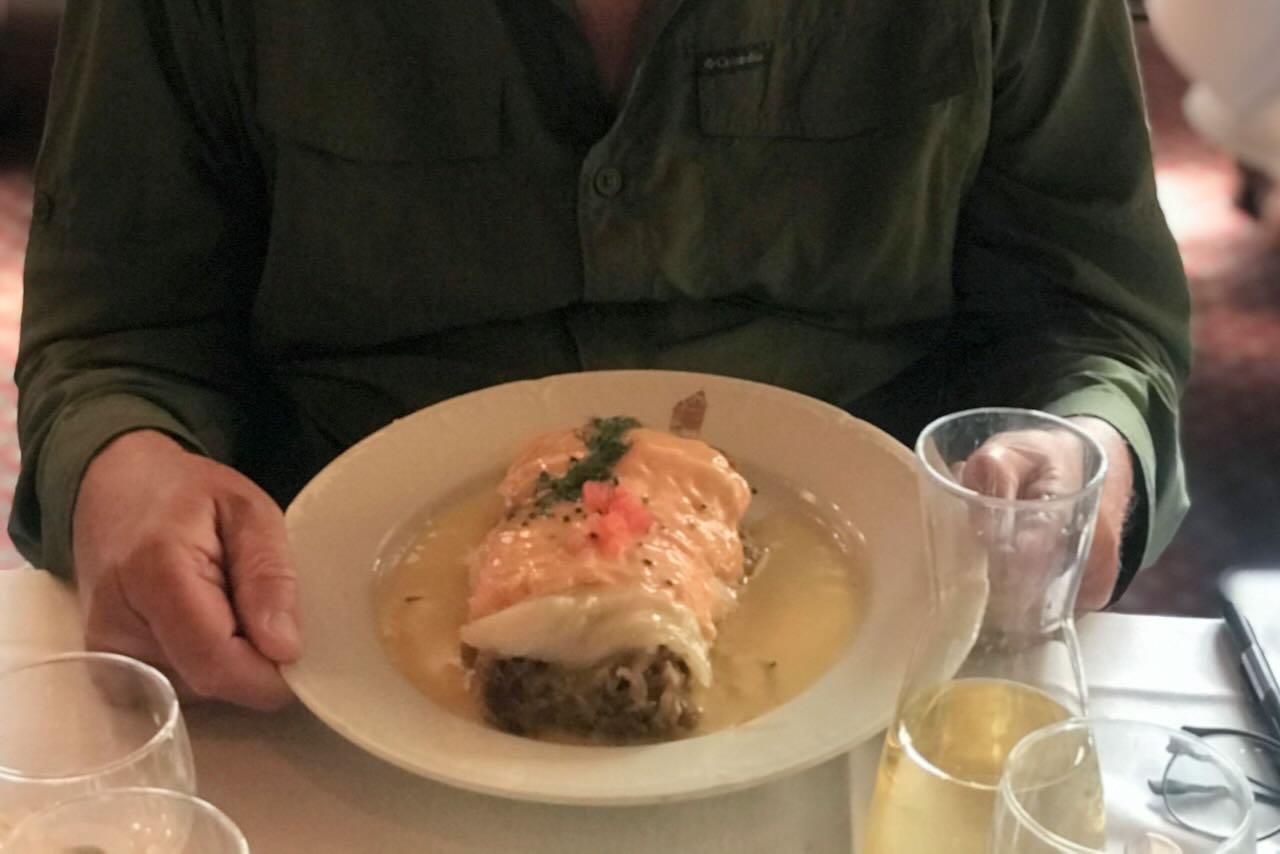
Maison Kammerzell is the definitive address for choucroute in Strasbourg. Housed in one of the city’s most historic and beautifully preserved buildings (a showstopper!!), it serves a refined yet traditional version of the dish.
This place is renowned for its choucroute de poissons, a beautifully balanced interpretation built around 3 types of fish (salmon, halibut and haddock) and finished with a delicate beurre blanc. The dish is lighter than the traditional meat version yet every bit as satisfying. We absolutely adore this preparation; it is refined, generous, and memorable, even though their classic meat choucroute remains excellent in its own right. Highly recommended.
Where to Eat It in Paris
Paris offers two excellent interpretations, each with its own personality.
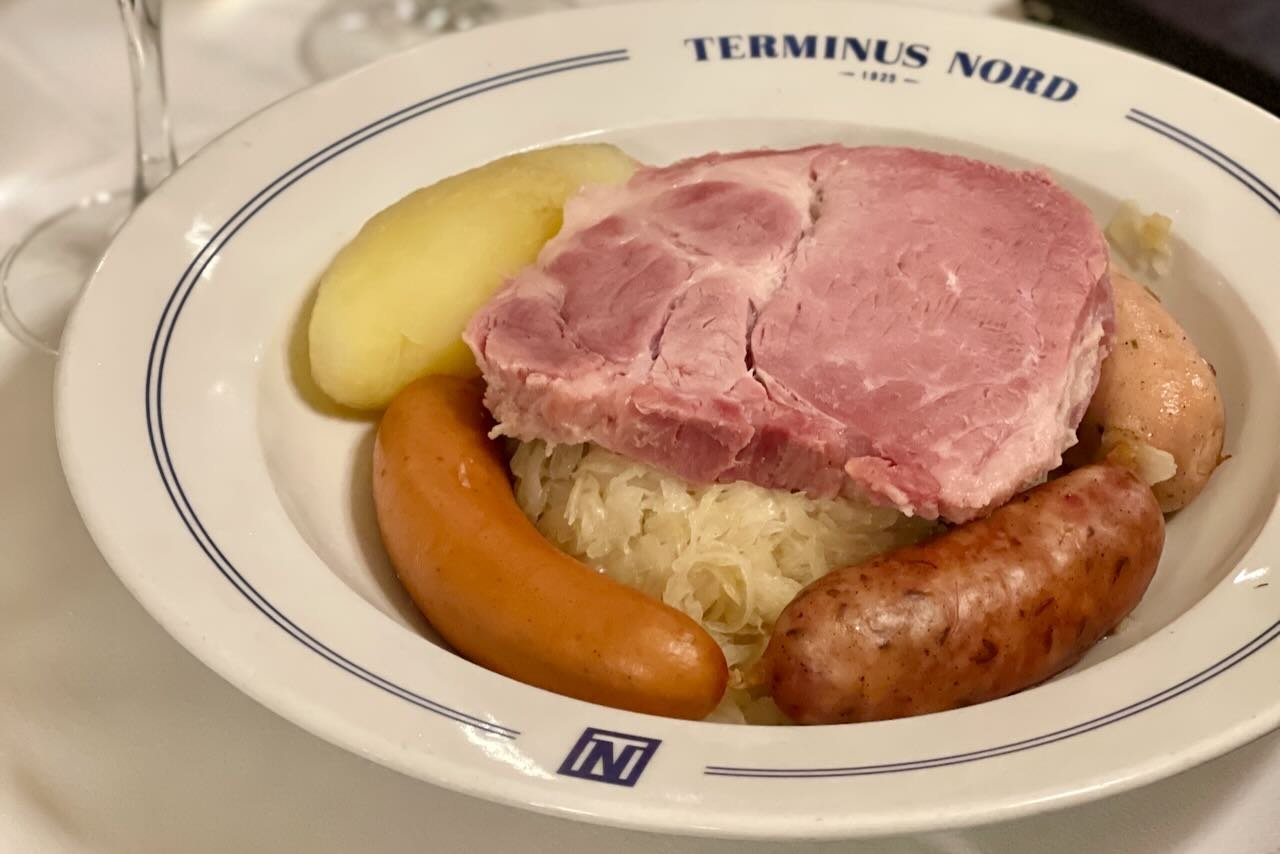
1) Terminus Nord, directly across from the Gare du Nord, offers a more bustling, classic brasserie atmosphere. Their choucroute is generous, traditional, and consistently well executed, making it a favorite among travelers and locals who want a hearty, reliable version of the dish in a lively setting.
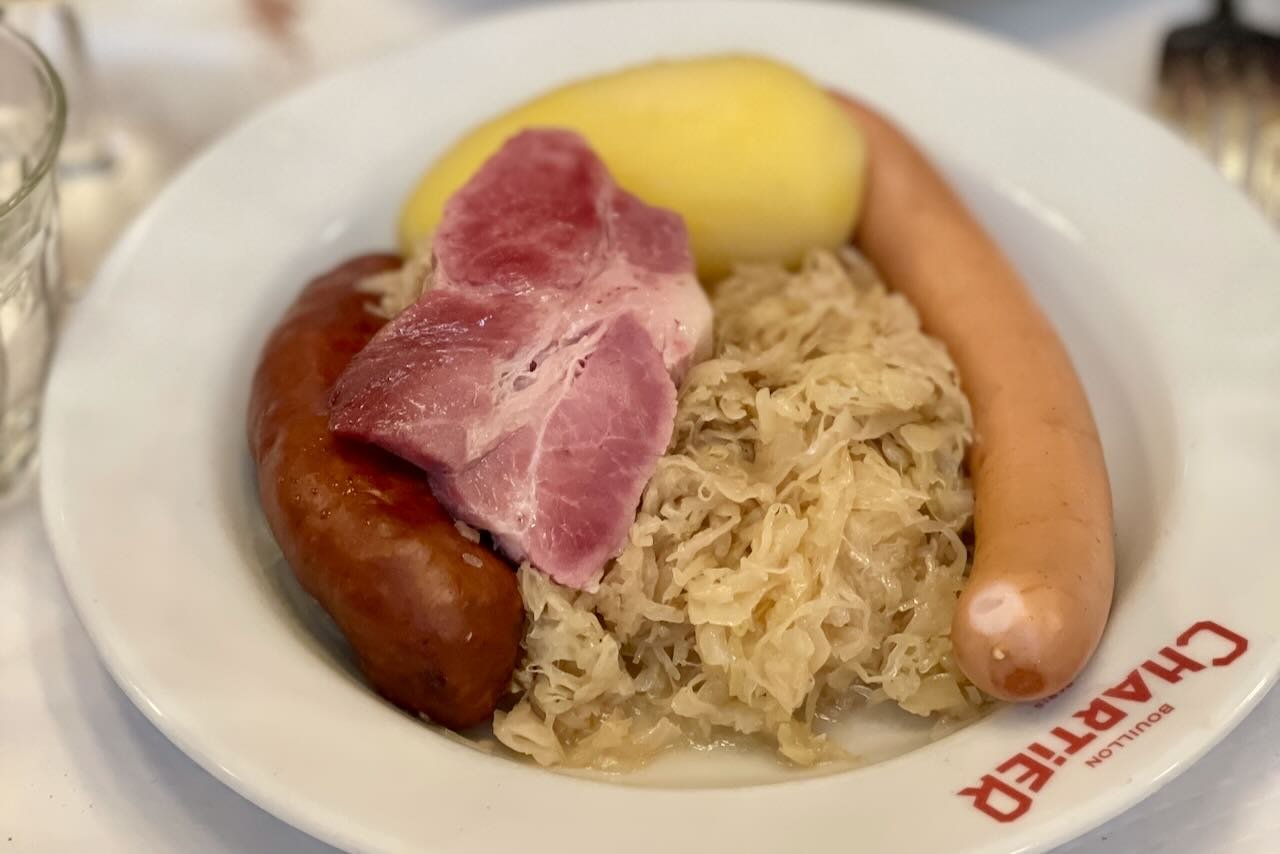
2) Bouillon Chartier, offers a different but equally appealing take on choucroute in Paris. Known for its bustling, Belle Époque dining room and democratic pricing, it serves a straightforward, traditional version of the dish that reflects the spirit of the classic Parisian bouillon: generous portions, honest flavors, and a focus on accessibility rather than embellishment. It is an excellent option for readers who want an authentic, everyday choucroute experience in a historic setting without the formality of the grand brasseries.
3) Bofinger, often described as one of the city’s most beautiful brasseries, has served choucroute garnie since 1864. Their towering platter of Riesling‑braised sauerkraut and assorted meats is both elegant and deeply traditional, capturing the Parisian talent for elevating rustic dishes without losing their soul.
We haven’t been here yet, however American expat vloggers The Frenchies in Paris truly recommend Bofinger for an excellent choucroute in Paris.
Sauerkraut and Fish: A Lesser‑Known Tradition
While meat‑heavy versions dominate, both Germany and France have long traditions of pairing sauerkraut with fish. This was especially common during fasting periods or in coastal regions. Salmon, cod, haddock, and trout all pair beautifully with the acidity of the cabbage. In France, choucroute de la mer has become a modern brasserie favorite, often served with beurre blanc for a lighter interpretation.
The Fermentation That Started It All
Sauerkraut’s signature tang comes from lactic acid fermentation, a natural process in which beneficial bacteria convert sugars into lactic acid. This preserves the cabbage while enhancing its nutritional profile. It is rich in vitamins C and K, naturally low in calories, and full of probiotics. Long before refrigeration, this was a culinary lifesaver.
A Dish Woven Into Celebration
In both Germany and France, sauerkraut is tied to tradition. Eating it on New Year’s Day is believed to bring luck and prosperity. Oktoberfest menus are filled with it. Alsatian villages host festivals dedicated to the harvest and fermentation season. It is a dish meant to be shared, often appearing at gatherings, celebrations, and family tables.
A Few Stories Worth Sharing
German sailors famously carried sauerkraut on long voyages to prevent scurvy thanks to its high vitamin C content. Captain Cook adopted the practice after observing its effectiveness. Napoleon, impressed by its health benefits, encouraged its production for French troops. And in Alsace, there is even a ceremonial Brotherhood of Sauerkraut dedicated to preserving the tradition, complete with annual festivities.
Why Sauerkraut Endures
It is comforting, nutritious, affordable, and endlessly adaptable.
Whether served in a medieval Berlin tavern, a Bavarian beer hall, a Strasbourg landmark, or a Parisian brasserie, sauerkraut remains a dish that connects people across borders and centuries. It is a reminder that simple ingredients, treated with care and tradition, can become something extraordinary.
Its longevity also speaks to its versatility: sauerkraut thrives in humble kitchens and grand dining rooms alike, absorbing regional accents while preserving its essential character. Few dishes manage to feel both deeply local and universally familiar, and that quiet duality is part of its enduring charm, ensuring it remains beloved across generations.