Pan con tomate turns 4 simple ingredients into a Spanish icon.
There are dishes that impress because they’re elaborate — and then there’s pan con tomate, the Spanish tomato bread that wins hearts precisely because it isn’t.
Just toasted bread, ripe tomatoes, good olive oil, and a pinch of salt. That’s it. Yet this humble Catalan staple has become one of the most beloved tapas across Spain, from Barcelona’s neighborhood bars to seaside chiringuitos and Michelin‑starred menus.
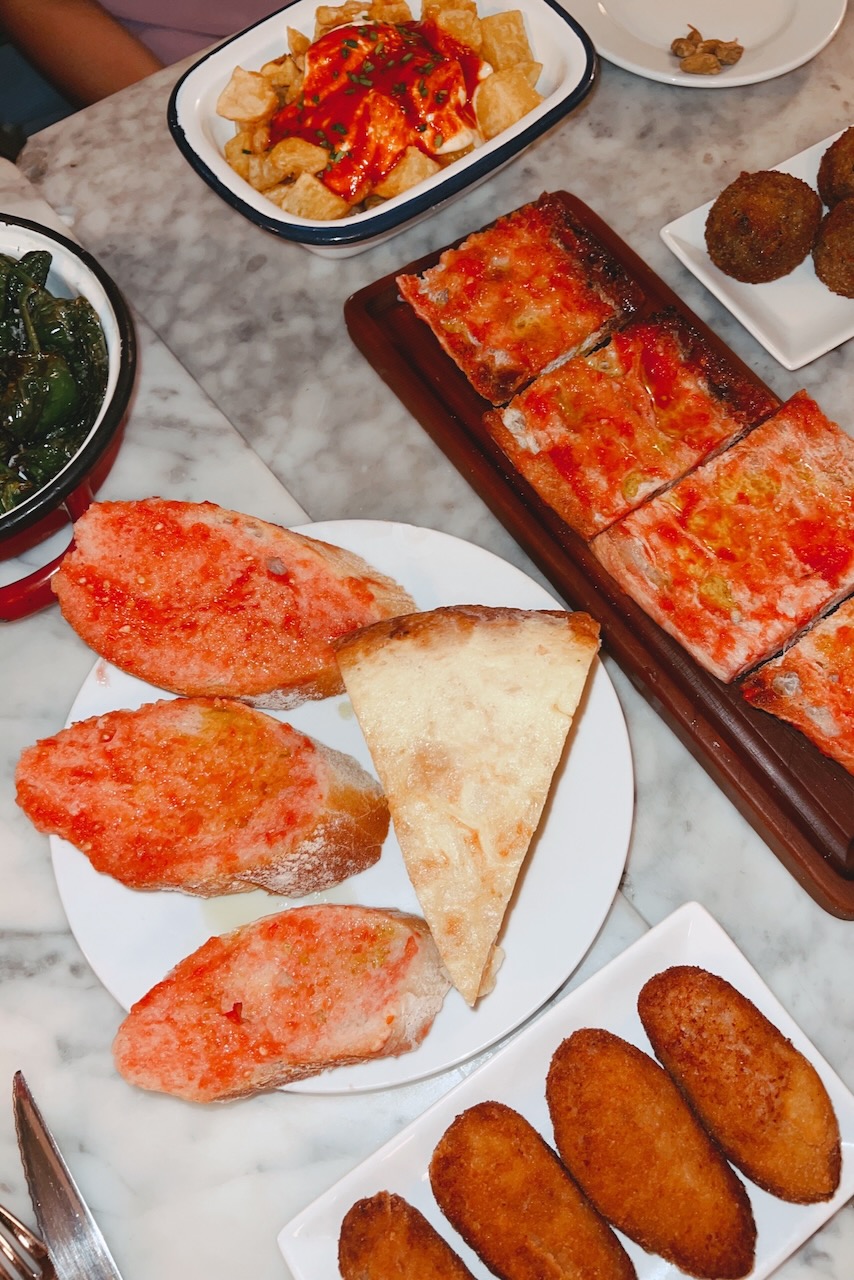
If you’ve ever sat at a bustling tapas table — croquetas de Jamón, patatas bravas, padrón peppers, papas arrugadas, a glass of vermut — you’ve probably seen pan con tomate arrive first. It’s the dish that sets the tone: unfussy, generous, sun‑kissed, and deeply Mediterranean. And it deserves its own spotlight.
This guide dives into everything that makes pan con tomate iconic: its origins, its ingredients, how it’s traditionally prepared, how it’s eaten, and why it’s one of the most important dishes in Spanish food culture.
What Is Pan con Tomate?
At its core, pan con tomate is toasted bread rubbed with ripe tomato, drizzled with olive oil, and finished with salt. In Catalonia, where the dish originates, it’s known as pa amb tomàquet, and it’s considered a daily essential — not a recipe, but a way of life.
What makes pan con tomate special isn’t complexity; it’s the quality of the ingredients. The tomato must be juicy and ripe. The bread must be sturdy enough to hold moisture. The olive oil must be fruity and generous. When these elements come together, the result is a perfect balance of crunch, acidity, sweetness, and richness.
It’s the kind of food that tastes like sunshine.
A Brief History of Pan con Tomate
The story of pan con tomate begins in Catalonia in the late 19th or early 20th century, when tomatoes became widely available in Spain. Farmers would rub overripe tomatoes onto stale bread to soften it — a practical, zero‑waste solution that evolved into a beloved tradition.
Today, Spanish tomato bread is served:
- at breakfast with coffee
- at lunch alongside grilled fish
- at dinner as part of a tapas spread
- at home, in restaurants, at celebrations, and on ordinary Tuesdays
It’s one of the few dishes that crosses every social and culinary boundary in Spain.
Pan con Tomate vs. Pa amb Tomàquet: What’s the Difference?
You’ll see both names used, but they’re not identical.
- Pa amb tomàquet is the Catalan original. The tomato is rubbed directly onto the bread, often after rubbing a clove of garlic.
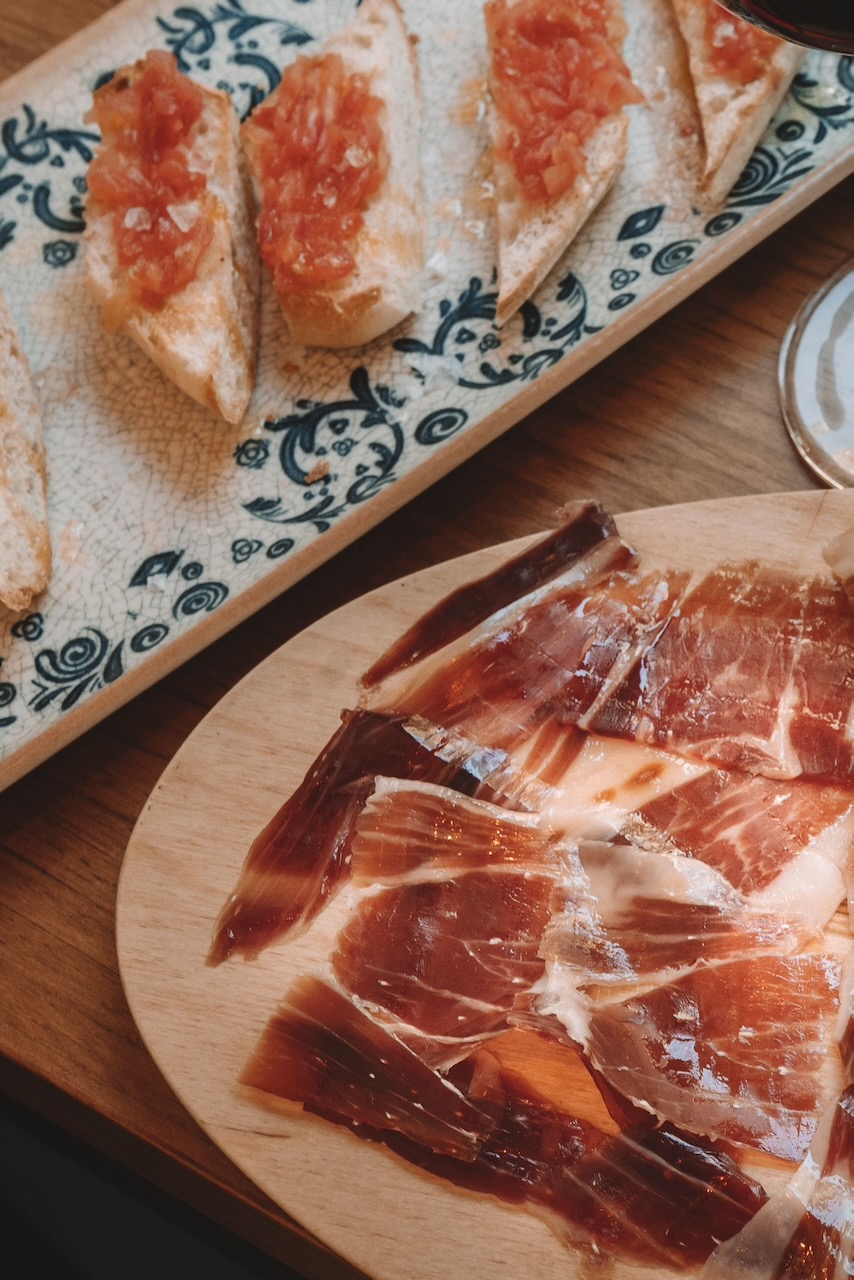
- Pan con tomate is the Spanish adaptation. Sometimes the tomato is grated and spooned on top instead of rubbed.
Both are correct. Both are delicious. Both deserve a place on your table.
But if you want the most traditional Catalan experience, you rub — you don’t spoon.
Why Pan con Tomate Works: The Beauty of Four Ingredients
1. Bread
The bread is the foundation of good pan con tomate. It should be:
- rustic
- crusty
- sturdy
- toasted or grilled
Think pan de payés, ciabatta, or any country loaf with a good crumb. Soft sandwich bread won’t survive the tomato rub.
2. Tomatoes
Spanish cooks use tomate de colgar — small, hanging tomatoes with thin skins and intense flavor. Outside Spain, the best substitutes are:
- vine‑ripened tomatoes
- heirloom tomatoes
- Roma tomatoes (if very ripe)
The key is ripeness. A pale, watery tomato will never make great pan con tomate.
3. Olive Oil
This is not the moment for restraint. Pan con tomate needs a generous drizzle of extra virgin olive oil — fruity, peppery, and golden.
4. Salt
A pinch of flaky sea salt wakes everything up. It’s the final flourish that makes the tomato sing.
How Pan con Tomate Is Traditionally Eaten in Spain
If you order pan con tomate in Barcelona, it often arrives unassembled: toasted bread, halved tomatoes, garlic, olive oil, and salt. You build it yourself at the table.
The ritual goes like this:
- Rub the garlic lightly over the warm bread.
- Rub the tomato vigorously until the bread is stained red.
- Drizzle with olive oil.
- Sprinkle with salt.
- Eat immediately.
It’s interactive, tactile, and deeply satisfying — a moment of simple pleasure before the rest of the tapas arrive.
In other parts of Spain, especially Madrid and Andalucía, the tomato is grated and spooned onto the bread instead. Same idea, different texture.
Where You’ll Find Pan con Tomate in Spain
Everywhere. Truly.
- Tapas bars serve Spanish tomato bread as a starter or side.
- Breakfast cafés offer it with jamón or cheese.
- Beach restaurants pair it with grilled sardines.
- Homes serve it with tortilla española or anchovies.
It’s one of the most universal dishes in Spanish cuisine — as essential as olive oil itself.
Perfect Pairings for Pan con Tomate
Pan con tomate is rarely eaten alone. It’s a supporting actor that makes everything around it taste better.
Some classic pairings:
- Jamón ibérico — the salty richness is perfect with tomato acidity
- Anchovies — especially boquerones in vinegar
- Tortilla española — the ultimate Spanish comfort combo
- Cheese — manchego, mahón, or fresh goat cheese
- Grilled vegetables — especially peppers and zucchini
- Seafood — sardines, tuna, or grilled prawns
And of course, it belongs on any tapas table alongside croquetas, patatas bravas, and padrón peppers — just like in your hero photo.
Why Pan con Tomate Is a Mediterranean Icon
Spanish tomato bread captures everything that makes Mediterranean food so appealing:
- seasonal ingredients
- minimal processing
- bold flavors
- healthy fats
- simple techniques
- communal eating
It’s proof that you don’t need complexity to create something memorable. You just need good ingredients and a little sunshine.
The Spanish Take Their Pan con Tomate Very Seriously
If there’s one thing you learn quickly in Spain, it’s that pan con tomate isn’t just bread with tomato. It’s a point of pride. A cultural non‑negotiable. A dish so essential that even the most unexpected places treat it with respect.
Case in point: Spanish McDonald’s.
Walk into any McDonald’s in Spain during breakfast hours and you’ll find pan con tomate on the breakfast menu — not as a novelty, but as a standard morning option. You get:
- warm grilled bread
- a small tub of extra‑virgin olive oil
- a tub of freshly grated tomato
- salt
And that’s it. No shortcuts. No ketchup. No tomato paste. Just the real components of pan con tomate, ready for you to assemble at the table like any Catalan grandmother would expect you to.
It’s a perfect example of how deeply rooted this dish is in everyday Spanish life. When a global fast‑food chain adapts to local tradition — and does it respectfully — you know the dish is more than a recipe. It’s identity.
In Spain, pan con tomate isn’t optional. It’s cultural infrastructure.
Pan con Tomate Around the World
As Spanish cuisine has gained global popularity, Spanish tomato bread has become a staple far beyond Spain. You’ll find it:
- in New York wine bars
- in London tapas restaurants
- in Australian brunch cafés
- in Belgian bistros with a Mediterranean twist
Chefs love it because it’s versatile, vegan, and universally appealing. Home cooks love it because it’s effortless. Food lovers adore it because it tastes like summer.
Tips for Making the Best Pan con Tomate at Home
Even though this isn’t a recipe post, a few practical tips help readers get it right:
- Use the ripest tomatoes you can find.
- Toast the bread until it’s deeply golden.
- Don’t skip the olive oil — be generous.
- Add garlic only if you like it; it’s optional but traditional.
- Serve immediately so the bread stays crisp.
Spanish tomato bread doesn’t wait. It’s meant to be eaten the moment it’s made.
Why You Should Add Pan con Tomate to Your Table
Because it’s simple. Because it’s delicious. Because it’s the kind of food that brings people together. Pan con tomate is more than a dish — it’s a ritual, a memory, a taste of Spain that you can recreate anywhere.
Hosting a tapas night, planning a Mediterranean brunch, or just craving something fresh and satisfying? Spanish tomato bread belongs in your repertoire.
It’s the dish that proves the oldest culinary truth: when ingredients are good, less is more.
FAQ About Pan con Tomate
What is pan con tomate made of?
Just four ingredients: good bread, ripe tomatoes, olive oil, and salt. Some regions add a rub of garlic, but the base stays the same.
Is pan con tomate the same as bruschetta?
No. Bruschetta uses chopped tomatoes on top, while this Spanish tomato bread uses grated or rubbed tomato that soaks into the bread. The texture and flavor are completely different.
Do you toast the bread for pan con tomate?
Yes. The bread is always grilled or toasted so it can hold the tomato without getting soggy.
Can you make pan con tomate ahead of time?
You can grate the tomatoes in advance, but assemble just before serving. The bread should stay crisp.
Why is pan con tomate so popular in Spain?
It’s simple, fresh, and deeply tied to Catalan and Spanish food culture. You’ll find it everywhere — even on the breakfast menu at Spanish McDonald’s.