Some trips feed you. Others quietly rearrange your brain.
My Frank Lloyd Wright tour in Chicago did both — a full sensory reset wrapped in warm wood, geometric light, and the kind of architectural storytelling that makes you see space differently.
I’ve always appreciated beautiful buildings, but stepping into Wright’s world felt like being invited into someone’s imagination. He didn’t design houses. He designed experiences — places that shape how you breathe, move, and feel.
Chicago is the perfect city for this kind of pilgrimage. It’s where Frank Lloyd Wright experimented, rebelled, refined, and ultimately changed American architecture. And I got to wander through four of his masterpieces: Unity Temple, his Home & Studio, Robie House, and the Rookery staircase. Each one felt like a different chapter in the story of a man who refused to build boring boxes.
Let me take you along.
Unity Temple: A Spiritual Glow in Concrete
Unity Temple sits in Oak Park like a quiet revolution. Imagine being a churchgoer in 1908 and seeing this blocky, modern, poured‑concrete cube rise from the ground. No steeple. No stained‑glass saints. Just geometry, light, and intention.
Inside, the sanctuary glows in warm amber. Light filters through high windows, bouncing off wood and softening the concrete. It feels grounding and uplifting at the same time — like a deep breath you didn’t know you needed.
Frank Lloyd Wright believed spirituality didn’t need ornamentation. It needed warmth, community, and a sense of being held. Unity Temple does exactly that.
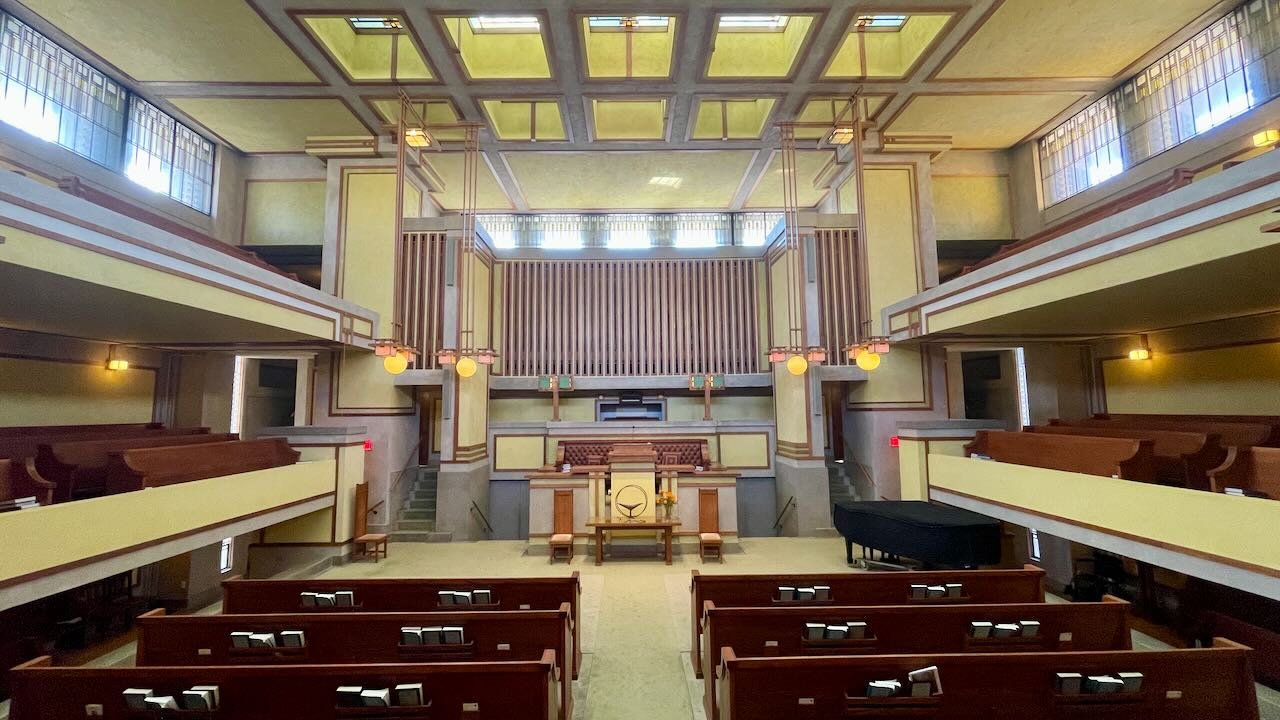
The Walk to His Home & Studio: An Open‑Air Wright Museum
From Unity Temple, you can stroll through one of the most magical neighborhoods in America: the Frank Lloyd Wright Historic District. It’s a leafy, peaceful stretch of Oak Park where Wright lived, worked, and quietly reshaped residential architecture.
And the best part?
You can walk past several of his privately owned houses — each one a little architectural Easter egg.
You’ll spot gems like:
- Arthur Heurtley House — pure Prairie style, long and low and confident.
- Nathan G. Moore House — Tudor meets Wright, a fascinating hybrid.
- Peter A. Beachy House — a remodel turned into a Wright signature.
- Frank Thomas House — serene, horizontal, beautifully grounded.
- Walter Gale House — one of his early “bootleg” designs, full of youthful ambition.
It feels like flipping through Wright’s sketchbook — early ideas, bold experiments, and the beginnings of the Prairie style all living side by side. A slow, dreamy walk that makes you look up more than down.
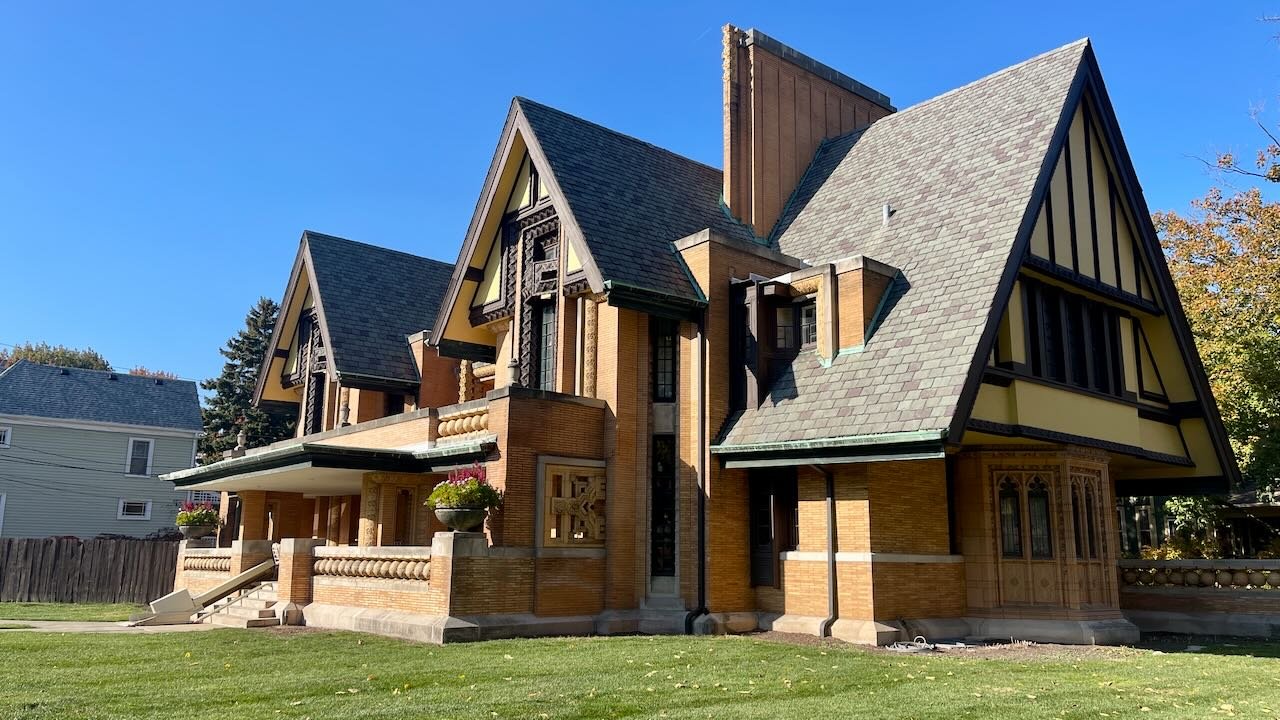
Wright’s Home & Studio: Where the Magic Happened
Then you reach his Home & Studio, the heart of everything. This is where Frank Lloyd Wright raised his children, sketched his dreams, and built the foundation of his career.
The house feels intimate and intentional — every corner purposeful, every window framing something worth noticing. But the studio is the real goosebump moment.
High ceilings. Floating balconies. Light pouring in like it’s been choreographed.
You can almost hear the pencils scratching, the apprentices murmuring, the ideas sparking. This is where the Prairie School was born.
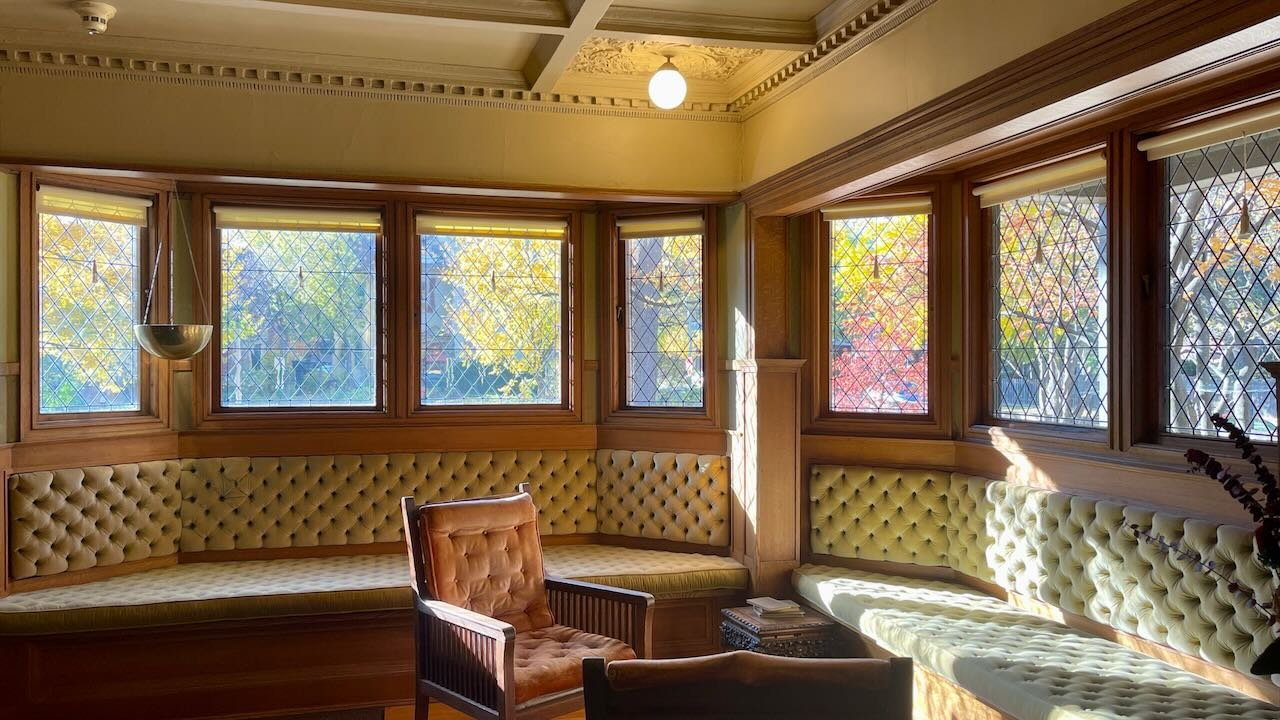
Robie House: Prairie Style in Full Bloom
Next stop: Hyde Park, home to the Robie House, one of Frank Lloyd Wright’s most iconic residential designs. If his Oak Park home was the seed, Robie House is the full bloom.
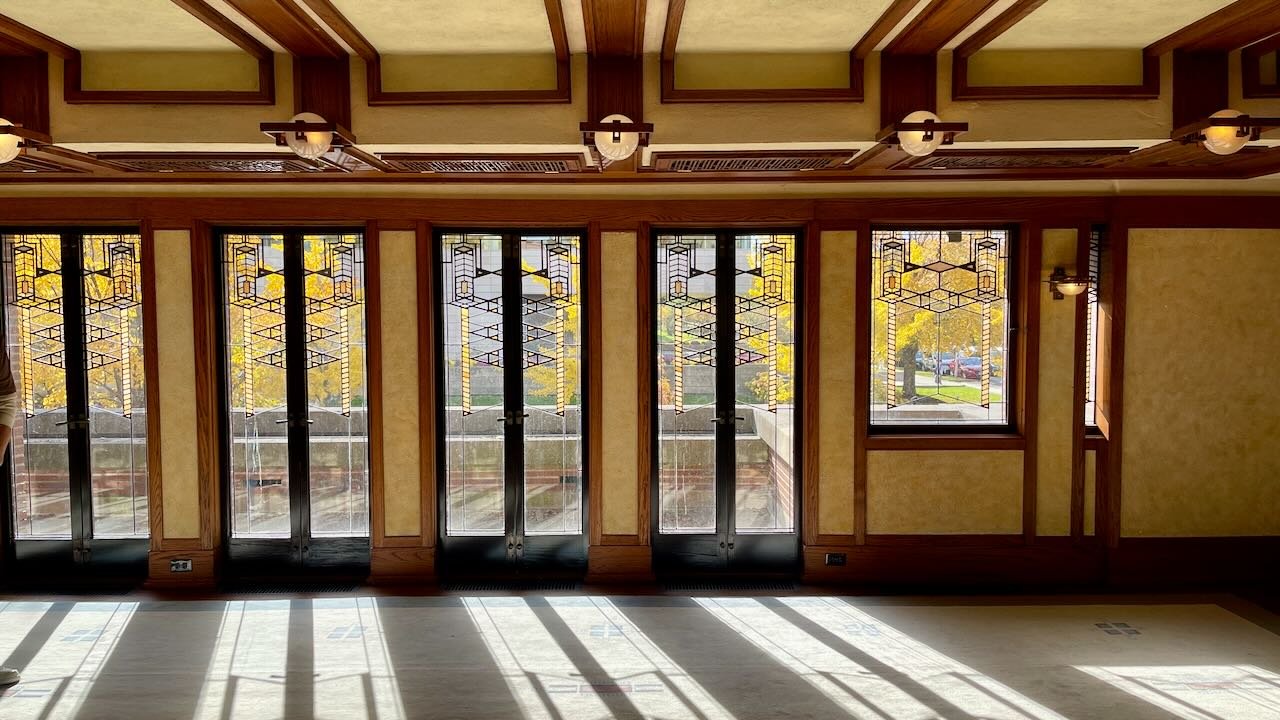
Long horizontal lines. Sweeping cantilevers. Art‑glass windows that look like jewelry.
It’s dynamic and serene at the same time — like the house is stretching into the landscape.
Inside, the rooms flow into each other with a softness that feels almost modern. Wright hated boxy rooms. Robie House is the antidote: a home that breathes.
The Rookery: A Staircase That Feels Like a Spell
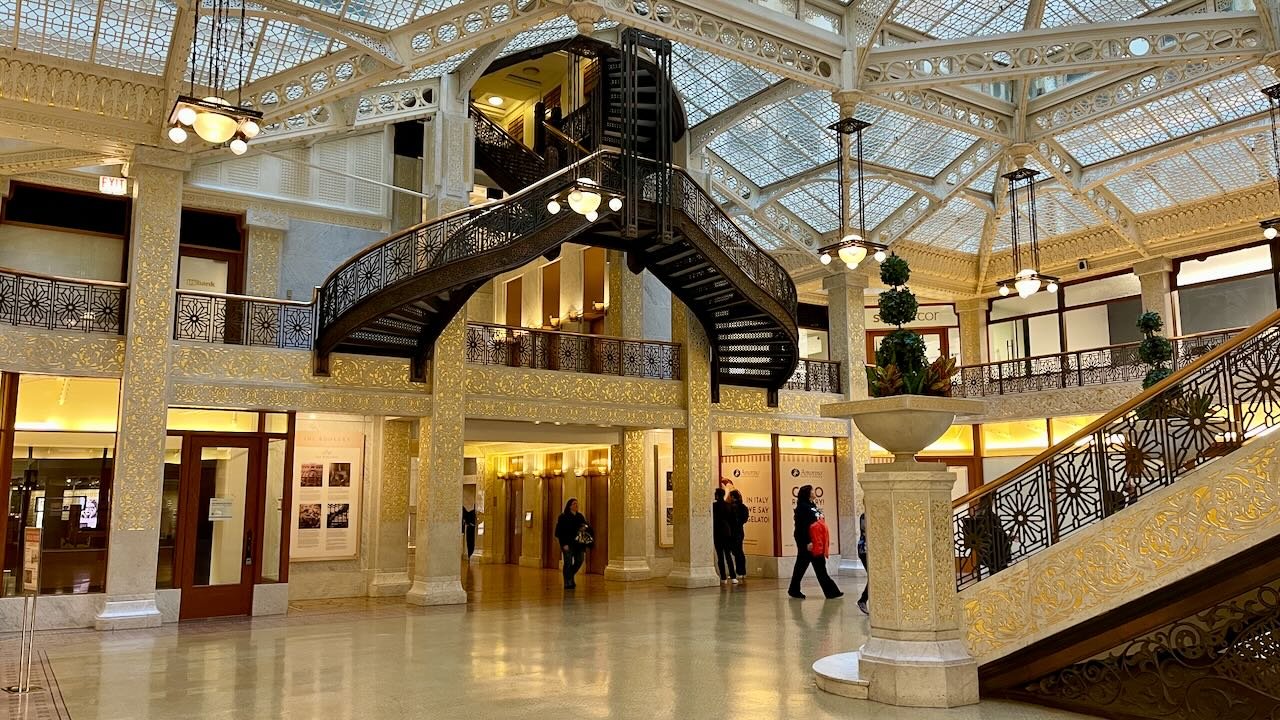
Back in the Loop, tucked inside a grand historic office building, is one of Wright’s most enchanting touches: the Rookery light court and its swirling iron staircase.
It’s delicate, airy, almost weightless — a poem in metal and light.
You don’t walk up that staircase. You float.
It’s Wright in conversation with someone else’s architecture, adding his voice without overpowering the original. A quiet collaboration across time.
What Ties It All Together
After visiting all these spaces, something clicked: Frank Lloyd Wright wasn’t designing buildings. He was designing emotions.
He wanted you to feel sheltered.
Lifted.
Curious.
Calm.
Connected.
He used light like a storyteller.
He used space like a composer.
He used architecture to guide your mood.
And walking through his work feels like walking through his evolving mind — early experiments, spiritual breakthroughs, confident masterpieces, playful flourishes.
Final Thoughts
If you ever find yourself in Chicago, carve out a day for Frank Lloyd Wright. Not because the buildings are famous — though they are. Not because they’re beautiful — though they absolutely are.
Do it because these spaces remind you that creativity isn’t just something you make.
It’s something you live inside.
And Wright built worlds worth living in.
Book your tickets on the official Frank Lloyd Wright website.